Broken Promises, Stolen Land
The treaties, the factions, and the lawsuit that almost changed everything
This is a collection of well-researched posts, offering insights and in-depth analysis on a variety of topics. Explore the articles below to expand your knowledge and stay informed on the latest trends and developments.
The treaties, the factions, and the lawsuit that almost changed everything
Introduction The Agikuyu pre-colonial political organization indicates a well-organized system of governance that was effective and lasted long. Many assume African societies lacked formal political systems, but the Agĩkũyũ provide a strong example that this is not true. They did not have a system where a single ruler, such as
How Colonisation Begins: The First Act of Taking Imagine the year is 1895. While you sleep in your homestead, thousands of miles away in London, a document is signed that declares your land, your entire world, the East Africa Protectorate under British authority. Before this moment, in 1884-85, European powers
Introduction The history of northern Kenya is often told through the experiences of large and politically visible pastoral communities such as the Borana, Somali, and Rendille. These groups dominate both academic literature and popular narratives, shaping how the region’s past is understood. Smaller communities that lived alongside them, shared
Introduction Marriage among the Agĩkũyũ (Kikuyu) people of central Kenya is far more than a union between two individuals; it is a deeply communal institution that binds families, lineages, clans, and even broader communities together. Unlike the individualistic, romantic model common in Western cultures, Agĩkũyũ marriage has historically been a
Introduction The Mbeere (Ambeere) are a Bantu-speaking people who inhabit the semi dry south eastern slope of Mount Kenya. They are largely located in what was once the Mbeere District, now a section of the Embu County; their land extends into the Tana River basin. Their culture has been shaped
Introduction Borana are Oromo-speaking pastoralists who live in southern Ethiopia and Northern Kenya. Borana people live in arid and semi-arid conditions, and their survival relies on the effective livestock husbandry measures, access to water, and the strong networks of social cooperation. The Gadaa, an indigenous political, social, and ritual system
Introduction The Suba people, part of the Bantu ethnic group, are predominantly located in the western part of Kenya, specifically in Nyanza Province. They are regarded as one of the last groups to settle in Kenya, having migrated from neighboring Uganda. This article explores the diverse aspects of Suba culture,
Education migration—where individuals move to different countries to pursue studies—has seen a steady increase over the last century. The desire for better educational opportunities has been the primary driving force behind this global...
Over the past five decades, millions of Kenyans have emigrated to other countries, mostly the developed countries in the west such as the United Kingdom, the United States, Canada, Australia, New Zealand and Germany among others in search for better jobs as well as living conditions....
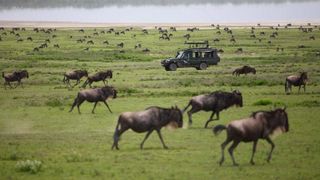
Africa is one of the largest continents in the world and is well endowed with natural beauty, natural resources, diverse culture as well as friendly and hospitable people. As such, it is not a surprise that the countries in Africa are able to attract millions of tourists who wish to experience....
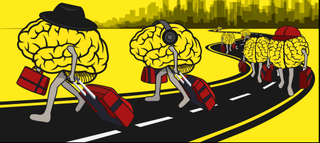
Brain drain is defined as the flight of human capital through the emigration of talented and skilled professionals to other countries or jurisdiction meaning that they cease providing their skills and services to their country of origin. Over the past few decades, there has been a debate on......
Money sent home by Kenyans living abroad has become a major part of the country's economy, even surpassing income from tourism, tea, and coffee. These funds, if properly used, can help fix financial challenges......
Kenya's Affordable Housing Program (AHP) is a major part of the government’s Big Four Agenda, designed to address the country’s serious housing shortage, especially in cities. The program aims to build 250,000 affordable homes each year to make housing accessible to low- and middle-income.....
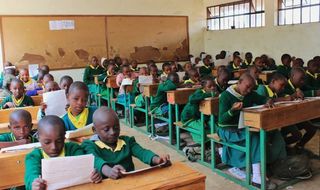
Kenya considers education to be a basic right for every citizen as it is crucial in the normal functioning of the society. Education in the country started as early as the 18th century mostly among the Swahili people. The first school in the country was built in Rabai by missionaries who wanted.....
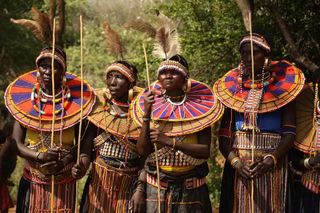
The Kalenjin people are an indigenous ethnic group primarily residing in Kenya, with smaller populations in Uganda and Tanzania. They are renowned for their rich cultural heritage, social organization, and impressive athletic prowess.....
Central Africa is a vibrant and diverse region that embodies a deeply layered cultural mosaic. Spanning countries like Cameroon, the Central African Republic, Chad, Gabon, and the Democratic Republic of the Congo (DRC), the region is home.....
The history of the British era in Egypt began in 1882 when the British forces occupied the country after the Anglo-Egyptian War and officially ended in 1956 after the withdrawal of British forces under the the 1954 .....
The phenomenon of migration to the Gulf states and the Middle East, particularly from South Asia and Africa, has been significant since the mid-20th century. Employment agencies have played a critical role in facilitating this migration, establishing a network....
Egypt became a part of the Ottoman Empire after Mamluk Egypt was conquered by the Ottomans in 1517. The conquest enabled the Ottomans to administer/govern Egypt as one of the provinces of the Ottoman Empire. Officially, Egypt remained a province of the Ottoman Empire until 1914......