Mihiriga ya Agĩkũyũ: The Clans of the Kikuyu People
Origins, structure, and meaning
Who Are the Agĩkũyũ?
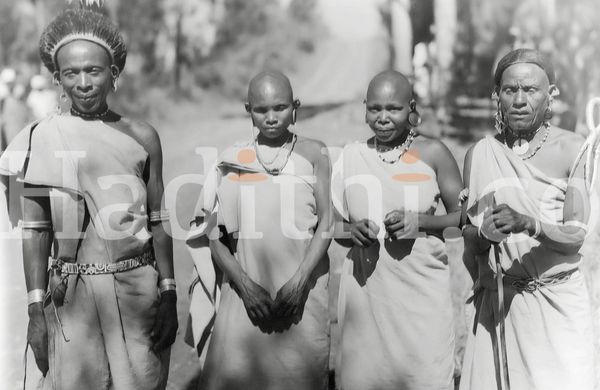
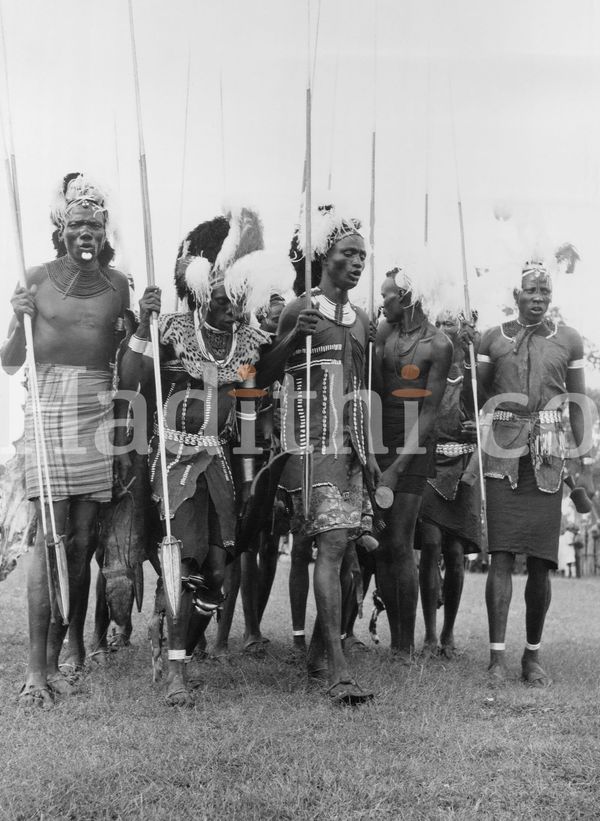
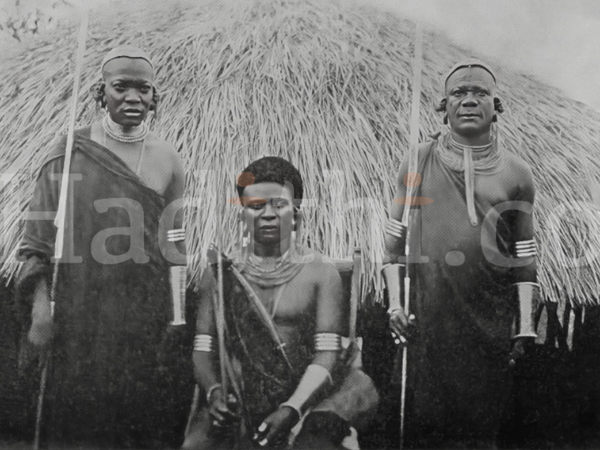
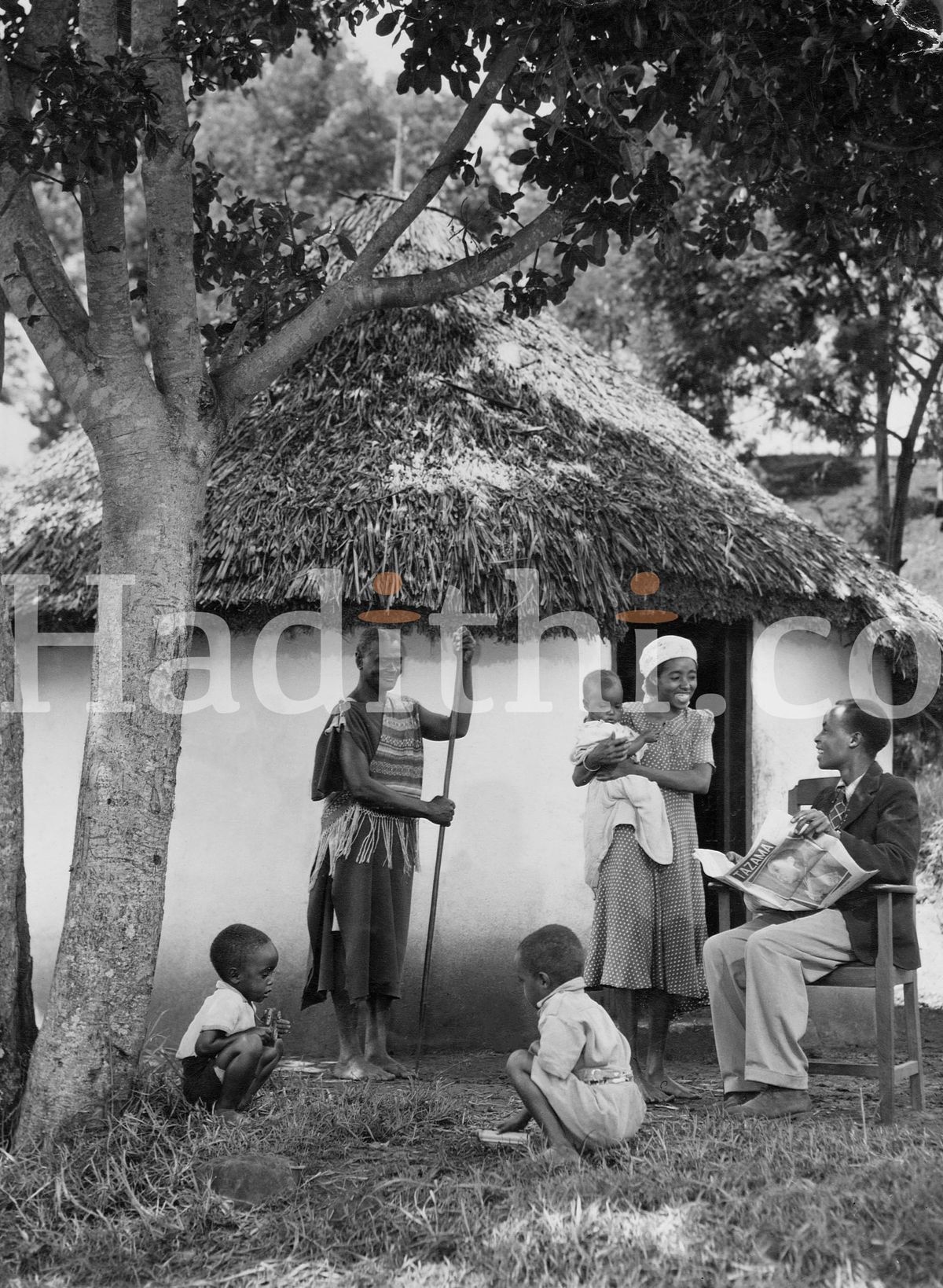
The Agĩkũyũ, known in English as the Kikuyu, are the largest ethnic group in Kenya, making up roughly twenty percent of the country's population. They are a Bantu-speaking people whose homeland is the central highlands: the ridged farmland of Murang'a, the slopes below the Aberdare Range in Nyeri, the hills of Kirinyaga, and the uplands of Kiambu stretching toward northern Nairobi.
Their bond with this land runs deeper than agriculture. As Jomo Kenyatta, Kenya's first president and himself a Kikuyu, wrote in his 1938 ethnography Facing Mount Kenya, ''In studying the Gikuyu tribal organisation it is necessary to take into consideration land tenure as the most important factor in the social, political, religious, and economic life of the tribe. As agriculturalists, the Gikuyu people depend entirely on the land. It supplies them with the material needs of life, through which spiritual and mental contentment is achieved. Communion with the ancestral spirits is perpetuated through contact with the soil in which the ancestors of the tribe lie buried. The Gikuyu consider the earth as the 'mother' of the tribe". This shows that there was a great desire in the heart of every Gĩkũyũ man to own a piece of land on which he could build his home. That desire was not simply about farming; it is spiritual and ancestral, a thread connecting the living to the dead and to Ngai, the Supreme Being who presides from the summit of Kĩrĩnyaga, Mount Kenya.
The roots of the Agĩkũyũ in this landscape are ancient and layered. Their precursors were part of a broader Bantu group known as the Thagicu, who migrated into the Mount Kenya region from central Africa. Archaeological evidence, including radiocarbon-dated iron-smelting sites and distinctive pottery, places the Thagicu in the Mount Kenya region from around the eleventh or twelfth century CE. The people we recognise as distinctly Agĩkũyũ emerged from this Thagicu stock and established a cultural core in the highlands around Murang'a by roughly the thirteenth century. A major southward expansion into Kiambu followed during the eighteenth and nineteenth centuries, driven by agriculture, land purchase, blood-brotherhood compacts (ũhoi), and the absorption of neighbouring communities through intermarriage.
The Agĩkũyũ share their Thagicu ancestry with the Embu, Meru, Mbeere, Tharaka, and Kamba peoples, a kinship visible in their closely related languages and many shared customs, though each group developed its own distinct identity over the centuries.
To understand the Agĩkũyũ is to understand a people organised not around centralised kingship; they had no kings or paramount chiefs, but through an intricate web of kinship, clan membership, and age-grade obligation. At the centre of that web sit the mihiriga: the clans.
The Social Architecture: Nyumba, Mucii, Mbari, Muhiriga
The muhiriga (clan; plural mihiriga) does not stand alone; it is the outermost layer of a nested social structure, and each layer inside it matters.
The most intimate unit is the nyumba (house): the nuclear family. Several related families sharing a compound form the mucii (homestead), the extended family household. Above this sits the mbari: a patrilineal group tracing descent from a common male ancestor, ranging from a few dozen to a few hundred people. The mbari was historically bound to a defined piece of land, the githaka, a collectively held family estate, and was governed by a council of senior elders led by the mũramati, a trustee whose position depended on community confidence and seniority rather than inheritance. As L.S.B. Leakey documented, any mbari member with surplus land was expected to extend cultivation rights to those who needed them, a built-in form of communal redistribution.
The Muhiriga, the clan, sits at the top of this structure. It is the broadest ring of shared identity, linking all Agĩkũyũ who trace descent from one of the founding daughters of Gĩkũyũ and Mũmbi. The clans were not geographically bounded: they lived side by side across all regions, which made clan solidarity a social network that cut across local communities. If a clan member was wronged far from home, the whole muhiriga was expected to seek justice. If you arrived at a homestead of your clan-mates as a traveller, hospitality was not a favour; it was an obligation.
Running alongside the clan system was the riika (age-grade; plural mariika). Boys and girls were circumcised in cohorts, and all initiates of the same year formed a riika that took a name marking a notable event of that time. This was not merely a social category: the riika was a political institution. Warrior cohorts defended the community; as they aged into elderhood, they governed through the kiama, the council of elders drawn from the currently senior age-grade. Political authority, therefore, was not a matter of clan rank or inherited wealth; it was a matter of age and accumulated ritual standing.
Clan and age-grade were two independent but interlocking axes of identity. Your muhiriga told you who your kin were and what ceremonial role your lineage played in the life of the community. Your riika told you what your civic and military duties were at every stage of your life.
The House of Mumbi: The Founding Narrative and Its Meanings
All Agĩkũyũ clan identity flows from a single founding story: Gĩkũyũ and Mũmbi.
In this tradition, Ngai created the first man, Gĩkũyũ, and took him to the summit of Kĩrĩnyaga to survey the land below forests, rivers, and fertile ridges stretching west to the Aberdares, south toward the Ngong Hills, north toward Garba Tula, and gave it to him and his descendants. Ngai then directed Gĩkũyũ down from the mountain to a grove of sacred fig trees (mũgumo) at a place called Mũkũrwe wa Gathanga, in present-day Murang'a County. There he found a woman, Mũmbi, whose name means "the creator" or "the moulder," and together they became the father and mother of the nation.
Gĩkũyũ and Mũmbi had daughters, nine acknowledged, ten in reality. When the daughters came of age, Gĩkũyũ prayed and sacrificed at the fig tree, and Ngai sent young men to marry them. From those unions descended the clans of the Agĩkũyũ. To this day, the people refer to themselves collectively as Nyumba ya Mũmbi, the House of Mumbi, and it is Mũmbi, not Gĩkũyũ, whose name holds the community's identity.
This is not a small detail. The clans are matrilineal in their naming: each muhiriga carries the name of a founding daughter, a female ancestor. Wanjirũ is the mother of the Anjirũ; Wanjiku is the mother of the Agacikũ. This reflects a real historical debate: many scholars, and Agĩkũyũ oral tradition itself, hold that the community was originally matriarchal, that women once held political and social authority, and that clan names are the surviving fossil of that earlier order.
Agĩkũyũ oral history records a shift away from this arrangement, embedded in the tradition of Wangu wa Makeri. Here, some care is needed, because Wangu wa Makeri was a real historical person, not simply a mythological figure. She was a Kikuyu woman who was appointed headwoman by the British colonial administration in 1902, the only female headwoman among the Agĩkũyũ during the entire colonial period. She became a controversial and feared tax collector, known for sitting on the backs of men who failed to pay. The oral tradition attached to her of men plotting to impregnate all women simultaneously to end female authority exists in two registers: as folklore about a primordial matriarchy and as a story told about her own historical governance. The scholar needs to hold both levels at once. What is historically clear is that by the time of any documented Agĩkũyũ society, political and property authority was patrilineal: children belonged to their father's mbari, land passed through the male line, and the kiama councils were male.
The clan names were never changed. The Mihiriga kept their feminine ancestry even as the operating system around them became patrilineal. This is why the Agĩkũyũ still call themselves the House of Mũmbi, the mother, not the House of Gĩkũyũ.
Kenda Mũiyũru: The Question of Nine or Ten
Ask any Agĩkũyũ elder how many clans there are, and the answer comes immediately: kenda mũiyũru, nine full. Every scholar who has studied the matter, however, agrees that there are ten.
This is not a contradiction. It is a deliberate practice rooted in a deep-seated taboo against fully counting living things known as mũgiro. The Agĩkũyũ traditionally believed that enumerating people or livestock to their complete number invited death or misfortune. You did not count your children to ten. You did not count your cattle to ten. And so you did not count your clans to ten. This is also seen in other cultures.
The phrase kenda mũiyũru "nine full" is a socially agreed way of meaning ten without saying it. Gakaara wa Wanjau, in his Mihiriga ya Agĩkũyũ (1967), put it plainly: even if the Agĩkũyũ say their clans are nine, it is widely understood that they are ten; the taboo prevents them from stating this directly, because to do so would bring harm to the community. Father Cagnolo recorded the same phrase in 1933: Mihiriga ni Kenda eihoire, the clans are nine in full. Stanley Kiama Gathigira wrote in Gĩkũyũ that "nine full is ten in the manner of counting people." Fred Kago's 1954 account gives the same formula.
The tenth daughter is Wamũyũ (also known as Warigia). She is described in tradition as having remained unmarried, yet still becoming a mother, making her a slightly marginal figure in the formal structure, which may partly explain why her clan, the Aicakamũyũ, became the one absorbed into the taboo of the uncounted tenth.
Northern and Southern Gĩkũyũ: Why the Clans Appear More Numerous Than They Are
One reason outsiders have historically overcounted the clans is that many carry more than one name. The Agĩkũyũ are broadly divided into two geographic streams: Northern Gĩkũyũ (Nyeri and Kirinyaga) and Southern Gĩkũyũ (Murang'a and Kiambu). These are the same people, speaking mutually intelligible dialects, but with enough regional variation that a single clan might be known by different names in different places.
This is why the early colonial ethnographer W.S. Routledge produced a list that appeared to show thirteen or more clans: he was recording regional name variants without recognising them as the same units. The Angui and Aithiegeni are one clan under two names. The Aithĩrandũ and Angeci are the same. Cross-referencing all the sources resolves the apparent proliferation back to ten distinct mihiriga.
Marriage, Exogamy, and the Interdependence of Clans
One of the most practical functions of clan membership was regulating who you could marry. Agĩkũyũ marriage followed strict exogamy, the requirement to marry outside your own group. A person could not marry anyone from their own muhiriga, nor from their father's clan. This meant every Agĩkũyũ carried at a minimum two clans they were forbidden to marry into.
The system did several things at once. It prevented land and wealth from concentrating within a single lineage. It built alliances across the community through marriage networks. And it made the ten clans genuinely interdependent: no clan was self-sufficient; every family needed others for the most basic act of continuing its existence.
A senior family member could, in exceptional cases, prohibit marriage with a particular clan if his household had suffered serious mistreatment from them, but this was a weighty sanction, invoked rarely and with consequences for both parties.
Clan solidarity extended into law. If your clan-mate was seriously wronged, the entire muhiriga was expected to unite and seek redress. And as Father Cagnolo noted in 1933, no Agĩkũyũ beginning a journey would think about where their next meal was coming from; hospitality from fellow clan members was not a personal favour but a structural obligation.
Clans, Land, and the Colonial Rupture
To understand the Mihiriga fully, you have to understand the rupture that reordered everything. When British colonialism arrived in the central highlands from the 1890s onward, formalised as the East Africa Protectorate in 1895, it did not merely impose a foreign government. It seized the land on which the entire Agĩkũyũ social structure rested.
The githaka system worked on the premise of an expanding frontier. As Muriuki's research shows, mbari groups divided as populations grew, with younger members pioneering new githaka and founding new branches. The system was dynamic: land moved, families grew, and new estates were carved from the forest. Colonial land alienation froze this process at precisely its most active phase, converting communal tenure into documented individual freehold while displacing tens of thousands of Agĩkũyũ from ancestral land and reducing them to ahoi, tenants on land that had previously been theirs.
The land grievance this produced was not abstract. It was intimate, personal, and accumulated across generations. The Mau Mau uprising of the 1950s, in which the Agĩkũyũ were the predominant participants, was at its core a war over land. Its rallying cry invoked not a political theory but the founding ancestors: Gĩkũyũ na Mũmbi Gĩkũyũ and Mumbi, whose covenant with Ngai had given the people their highlands in the first place. Gakaara wa Wanjau, who published the Gĩkũyũ and Mũmbi creed that articulated this call to unity, was detained by the colonial government until 1960 for doing so.
The mihiriga, in other words, were not merely a sociological curiosity. When the crisis came, they were the vocabulary through which the Agĩkũyũ understood themselves and their struggle.
The Mihiriga Today
What survives of the clan system in contemporary Agĩkũyũ life?
The totemic food prohibitions have largely faded. Few people today refuse meat on grounds of clan membership, and where the taboos are observed, it tends to be among older generations or in more rural settings. The specialised civic roles of the Anjirũ as battle-priests, the Angui as messengers to the council, and the Aceera as community advocates no longer function as formal institutions in a country with courts, a civil service, and an elected Parliament.
But clan identity has not disappeared; in some respects, it has grown more self-conscious. Knowing your muhiriga remains a mark of cultural literacy and family connection. The marriage exogamy rules still hold weight in many families, and most Agĩkũyũ are aware of them. Names continue to carry clan resonance: Wanjirũ, Wanjiku, Wambũi, Wangari, and the other ancestress names are among the most common women's names in Kenya, and they carry a quiet genealogical imprint even when their bearers do not think of them that way.
In politics, clan identity has sometimes been turned into a tool for factional competition, something the architects of the kiama system, where authority came from age-grade seniority and collective deliberation, would not have recognised as legitimate. The mihiriga were designed to create mutual dependence across the whole of Nyumba ya Mũmbi, not to divide it. When they are used divisively, it is a distortion of what they were.
What the clans represent, taken on their own terms, is a model of structured interdependence: a community that understood no single lineage could provide everything a society needs, its defenders, its healers, its negotiators, its orators, its investigators, its messengers, its warriors, its spiritual guardians. Every clan had a function. Every function was necessary. The House of Mumbi was a house in which every room was needed, and the point was never which room was biggest.
Key Sources and Further Reading
- Jomo Kenyatta, Facing Mount Kenya: The Tribal Life of the Gikuyu (1938)
- Gakaara wa Wanjau, Mihiriga ya Agĩkũyũ (1967)
- Godfrey Muriuki, A History of the Kikuyu 1500–1900 (Oxford University Press, 1974)
- Father C. Cagnolo (Consolata Mission), Akikuyu (1933)
- Stanley Kiama Gathigira, Mĩikarĩre ya Agĩkũyũ
- L.S.B. Leakey, The Southern Kikuyu Before 1903 (3 vols., 1977)
- H.E. Lambert, Kikuyu Social and Political Institutions (Oxford University Press, 1956)
- W.S. Routledge, With a Prehistoric People: The Akikuyu of British East Africa (1910)