Ituĩka, Riika, and the Generational System of Governance among the Agĩkũyũ
Introduction
The Agikuyu pre-colonial political organization indicates a well-organized system of governance that was effective and lasted long. Many assume African societies lacked formal political systems, but the Agĩkũyũ provide a strong example that this is not true. They did not have a system where a single ruler, such as a king, ruled them, and also did not have the process of passing power down the family lines. Rather, power was structured on a generational basis, which provided continuity and accountability. Ituĩka, which in simple terms translates to hand over, was the core of this system, in this case, it was the official transition of power between two generations. This transition carried with it political leadership, law, religious responsibilities as well as social organization. Past records indicate that the system was still in use even in the late nineteenth century. The final complete Ituĩka was between 1890 and 1898, shortly before colonialists started meddling with traditional systems. That is, this is how governance was renewed from time to time.
The Ituĩka system worked within a larger structure based on age sets, known as riika, and generational cycles, shaping how individuals progressed through life and how authority was exercised. Leadership was not about personal achievement but being part of a group that had developed over the years to assume responsibility. This system prevented power from remaining in the hands of a specific group of people, while allowing it to flow in a regulated, predictable manner to minimize conflict and ensure that authority is not abused. It also addressed a critical governance question: how to hand over power without instability. Competition and conflict were not a necessity since each generation was aware of its time to be in charge. Other African peoples, like the Maasai with their age-set system and the Gada system of the Oromo, might also have similar generational and age-set systems, demonstrating that the Aginkuyu were not an isolated case of organised government in Africa. Ituĩka was therefore not just a political process but one that ensured balance in the society, as leadership was tied to time, experience and collective responsibility as opposed to personal ambition or coercion.
Age Sets (Riika), Initiation, and the Structure of Social Organization
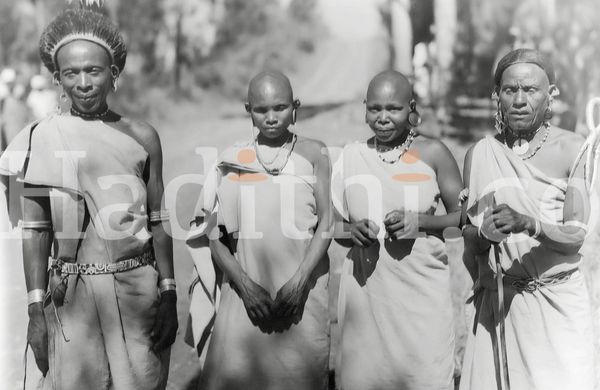
A key part of understanding the Kikuyu system of governance is knowing the difference between age groups and age sets, and the important role of initiation in forming these groups. Age groups are simple, informal categories based on age, such as children, youth, or elders. People naturally move from one age group to another as they grow older. However, age sets, known as riika, are very different. They are formal, permanent social groups created through initiation (irua), marking the transition from childhood to adulthood. For example, the Maina riika included people initiated during the same historical period. Once part of a riika, a person remains in that group for life, which defines their identity, responsibilities, and future role in society.
Riika were not just social groups; they formed the foundation of political organization because they later took on leadership. The timing of initiation was important because people initiated together formed a strong shared identity and unity. Initiation ceremonies often involved groups of boys undergoing circumcision together. This was both a personal experience and a public moment showing they belonged to the same riika. Members of a riika moved through life together, growing from youth to adulthood, then warriors, and eventually elders and leaders. This process was carefully organized to ensure leadership was based on experience and maturity rather than personal ambition. Thus, initiation was not just cultural but also a way of organizing time and leadership, determining when a group would come into power and when it would step down. Without this system, the Ituĩka process would not have worked properly. Additionally, riika brought together people from different families and clans, reducing conflict and encouraging unity. This made governing society easier. Overall, the system of age sets formed the foundation of the Kikuyu political system, shaping leadership development and social organization.
Generational Cycles, the Kiama, and Collective Authority
At the highest level of Kikuyu political organization, leadership was structured around generational cycles, most commonly seen in the alternation between the Maina and Mwangi generations. These generations did not rule simultaneously but governed one after the other. A key rule maintained this system: if a father belonged to one generation, his son belonged to the other. This left a distinct pattern of power that was easily foreseeable and followed by another group, thus it could not remain in the same family line too long. However, this two-generation system was part of a larger, more complex structure with several generational names that repeated over time. This enabled the Kikuyu to trace the past and have continuity between generations. The power of each generation was roughly thirty to thirty five years, long enough to produce leaders to rule, and hand over power to the next group. The most famous one is the final full Ituĩka of 1890-1898 when the Maina generation gave the power to the Mwangi generation. This was the last traditional change whereby Mwangi was the last ruling generation before colonialists led a change in the system.
This system has been informed by various sources, which include historical sources, oral traditions, and scholarly literature. The teachings of the elders who still practice Kikuyu traditions have been significant in the explanation of how the system operated in the daily life. Besides this, documents like colonial records in the Kenya National Archives, and the initial missionary literature provide additional information on how the system operated in those days. Important accounts of this system have also been given by scholars such as Jomo Kenyatta in Facing Mount Kenya, L. S. B. Leakey in The Southern Kikuyu Before 1903 and Greet Kershaw in her writings on Kikuyu society. By combining these different sources, it becomes easier to understand the Ituĩka system in a more complete and balanced way.
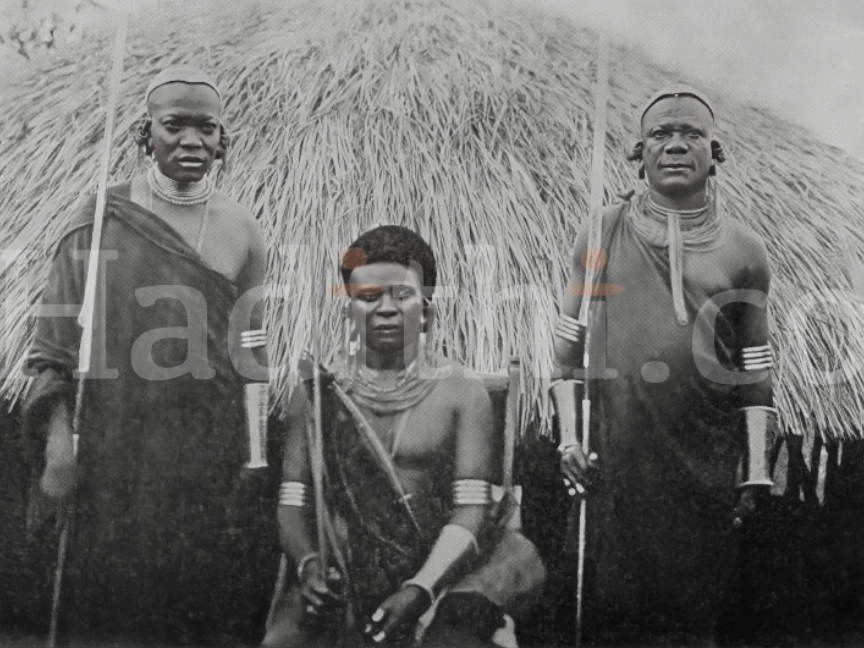
During the time a generation was in power, authority was exercised through the kĩama kĩa athuri, which was the council of elders. This council consisted of the representatives of the ruling generation and was in charge of critical areas of governance, including dispute resolution, land administration, decision making, and religious affairs. There was no single ruler, such as a king, which meant that power was shared among many individuals. This minimized the probability of an individual getting excessive control and ensured accountability. Kĩama decisions were arrived at by discussing and reaching an agreement, in which consensus was a significant element of Kikuyu leadership. The relationship between the generational cycles and the riika formed a structured and flexible system. It enabled leadership to carry on with time as well as ensuring that leaders were responsive to the needs of the society. This system, in general, demonstrates that Kikuyu government was highly organized and rested on collective responsibility, as opposed to personal authority.
The Ituĩka Process: Structure, Training, and Ritual Transition (Final Merged Version)
The Ituĩka process was the main way through which power was transferred from one generation to another in Kikuyu society, and it is important to understand that it was not a single event or ceremony but a long, carefully organized process that took place in several stages. It began with the younger generation holding meetings across different areas to decide whether it was their time to take on leadership. If they agreed, representatives from this generation approached the ruling generation to formally request the transfer of power, showing that the process was based on discussion, agreement, and recognition rather than force or conflict. Once the ruling generation accepted, the younger generation was required to prove its readiness to lead. One of the early steps in this process was the payment of hako ya Ituĩka, where each male member contributed livestock. This stage could take several months to complete and served both practical and symbolic purposes, demonstrating unity, commitment, and the ability of the generation to organize itself. After this, the younger generation took on additional responsibilities, including the right to conduct initiation ceremonies, which meant they were now responsible for shaping future generations.
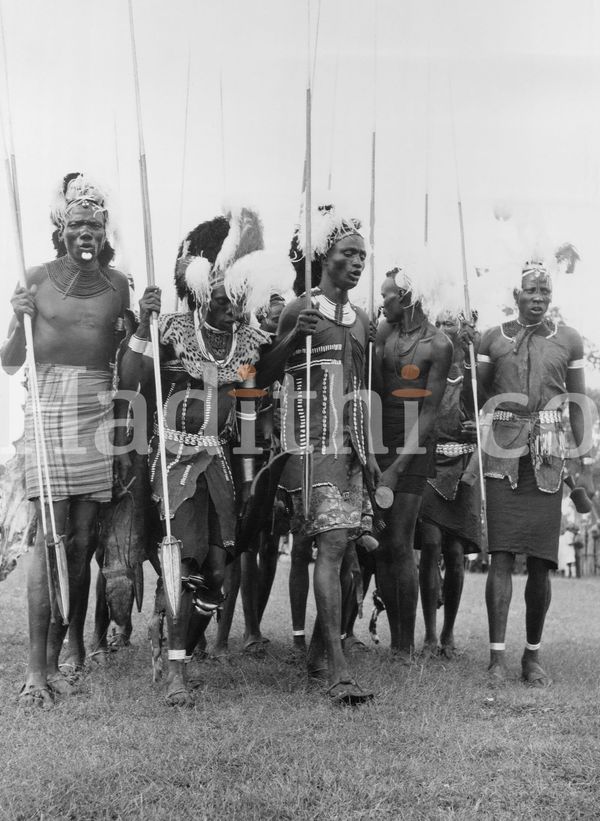
The process then moved into a teaching phase, during which members of the ruling generation and the incoming generation gathered in temporary settlements known as moraaro, where knowledge of laws, traditions, and governance was passed down. This ensured that leadership was not only transferred but also fully understood and properly prepared for. As the process continued, representatives were organized into larger gatherings, eventually leading to major ceremonies that included dances, sacrifices, and symbolic actions representing renewal and continuity within society. An important symbolic element during this stage was the mũthigi (staff), which served as a visible representation of authority and leadership among the Agĩkũyũ. Traditionally carried by senior elders (athuri), the mũthigi symbolized responsibility, legitimacy, and the right to govern, and during Ituĩka, its transfer from the outgoing generation to the incoming one represented the formal and recognized handover of power. This act made the transition not only understood but also visibly confirmed within the community, reinforcing the idea that authority was not personal but institutional and tied to generational responsibility. A well-known historical example of this system is the Ituĩka that took place between 1890 and 1898, which remains the last full traditional transfer of power before colonial interference.
However, historical records show that this process began to face serious challenges during colonial rule, particularly when an attempt to carry out Ituĩka ceremonies in 1925 was banned by the colonial administration, which feared that such gatherings could lead to resistance. This marked a major turning point, as the system was no longer allowed to function freely as it had before. At the end of the Ituĩka process, the old generation stepped down from leadership and withdrew from active governance, while the new generation assumed full control over political, judicial, and social responsibilities. Overall, the Ituĩka process was slow, organized, and deeply meaningful, ensuring that power was transferred in a peaceful, structured, and culturally recognized way while maintaining stability within Kikuyu society.
Significance, Stability, and Legacy of the Ituĩka System
The Ituĩka system was significant in ensuring stability and balance within the Kikuyu society because it offered a clear, well-structured means of distributing and transferring power. The avoidance of the long-lasting presence of power in the hands of one group was one of the primary strengths. Every generation was forced to relinquish power after a certain time span, which diminished the possibility of any group being too strong and dominating the society unfairly. It was also a system that guaranteed the peaceful transfer of power. There was no necessity to conflict or compete, as everybody knew how it worked and when they would have their time to lead. The leadership was not dominated by an individual but by a collective through the kĩama, or council of elders. This made sure that decisions were taken collectively, and it was based on what the community needed and not an individual. The other significant purpose was to save history. The Kikuyu had a way of remembering the events by the generation ruling them, which assisted them to know their history and continuity.
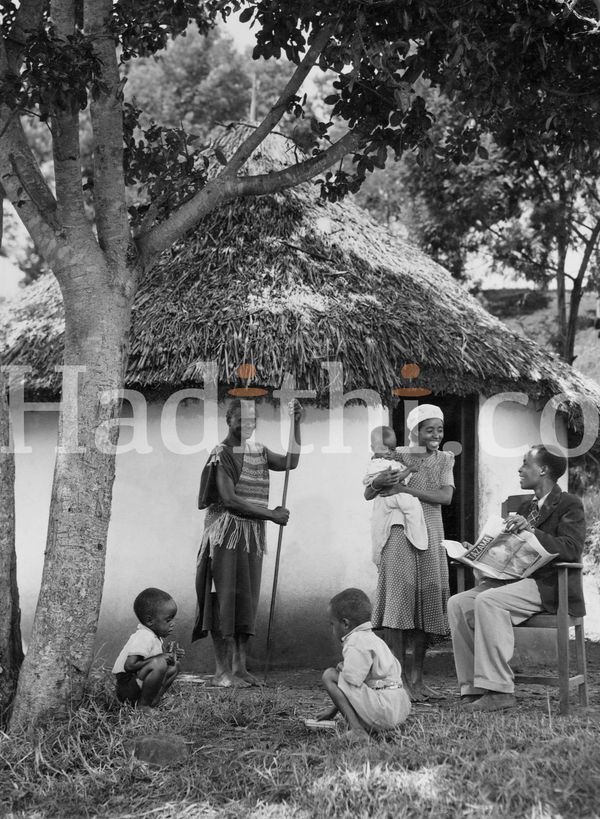
Despite its effectiveness, the system began to weaken during the colonial period when new governance forms were introduced. British colonial rule brought major changes that disrupted the traditional system. As an example, colonial powers brought in chiefs, such as a law such as the Native Authority Ordinances, which transferred authority out of the generational system and the kĩama. Kikuyu society was also influenced by changes in the ownership of land, particularly following the Crown Lands Ordinance of 1915. Additionally, colonial administrators often discouraged or stopped traditional gatherings, including Ituĩka ceremonies, fearing these meetings could lead to resistance. As an example, the colonial government prevented an attempt to hold an Ituĩka ceremony between 1925 and 1928. These actions weakened the system and reduced its role in governance. By the early twentieth century, the entire practice of Ituĩka had largely ceased, but a few elements had been retained in culture.
Nevertheless, the Ituĩka system remains quite significant in terms of researching the history of Kikuyu as it demonstrates that the Agikuyu had a highly developed and efficient mechanism of power administration and order within society. At its core, the system was based on a simple but powerful idea: power is temporary and must be passed on. This concept is still relevant in the current world as it emphasizes the important values in the governance of the state, including accountability, collective responsibility, and the necessity of a structured leadership change to ensure stability in the society.
Nature of Authority, Responsibility, and Generational Accountability
One of the main strengths of the Kikuyu system of governance was not only how power was transferred, but also how authority itself was understood and used within each ruling generation. In this system, authority was not seen as something a person owned or kept forever. Rather, it was perceived as a temporary role assigned to a specific generation, intended to take the lead on behalf of the entire community. The ruling generation was responsible for managing all major areas of society, including law and justice, religious affairs, land matters, and social relationships. It demonstrates that political control was not the only aspect of leadership, but moral and cultural responsibility were also involved. In other words, governing was seen as a duty to serve others, not as a personal advantage. The ruling generation members were expected to behave in a manner that was beneficial to the whole society, and they never forgot that one day, their reign would end. This realization produced an effective sense of responsibility since the successive generations were aware that they would one day be phased out and evaluated by the older generation, as well as by the younger generation.
The structured way people moved through life also supported this system. Between initiation and old age, people were experienced and learned with time, and by the time they became leaders, they were ready to be responsible. The expectation that they would eventually step down helped prevent leaders from holding power too long. This is contrary to systems where leaders attempt to remain in control forever and this may lead to conflict or instability. In the Kikuyu system, leadership was not permanent but part of a larger life cycle, with each stage having its own role and purpose. This was strengthened by the kĩama or council of elders who made sure that decisions were not made by an individual. This avoided any idea of domination by a single individual and leadership by the people reflected the common values and interests. On the whole, the Kikuyu system demonstrates a good sense of power; leadership is founded on responsibility, accountability, and the premise that power is not permanent and is to be shared.
Continuity, Memory, and the Role of Generations in Preserving History
The other significant aspect of the Kikuyu governance structure was the fact that it assisted in upholding history and continuity among generations. The Agikuyun did not have to use written records in the past, so they made generational cycles a method of time keeping and recollecting significant events. They did not write anything but related events to particular riika and ruling generations. Every generation was named and had its own place in the greater progression which helped people to better comprehend when something took place in comparison to other events. This formed a vivid and systematic manner of recalling the past. In this system, migrations, conflicts, alliances, and significant shifts in the society, among other events, were frequently recalled in terms of the generation that was ruling during the event. This assisted people in establishing a systematic chronology, even without written documents. In this way, the Kikuyu used what can be called an oral system of history, where knowledge was passed down through speaking, teaching, and shared memory.
The Ituĩka process also played an important role in maintaining this continuity. Every time power was transferred from one generation to another, it marked the beginning of a new period in history. This made it easier to divide time into clear phases, each linked to a particular generation. The Kikuyu understanding of time was therefore not strictly linear but cyclical, meaning that events were seen as part of repeating patterns of life, growth, and renewal. The role of elders in this system was very significant since they were to preserve and pass on knowledge. In the Ituĩka process, particularly in the teaching stage, the older generation of people used to inform the younger generation about the traditions, past events, and social rules. They achieved this by telling stories, offering guidance, and engaging in rituals, so that valuable knowledge would not be forgotten. This shows that governance and history were closely connected in Kikuyu society. Leadership was not only about making decisions in the present, but also about understanding the past and preparing for the future. By linking history to generations, the Agĩkũyũ created a strong and reliable way of preserving knowledge over time. In this sense, the Ituĩka system was not only a method of transferring power but also a way of maintaining cultural identity and historical awareness across generations.
Final Reflection: Ituĩka as a Model of Structured and Balanced Governance
When considered in its entirety, the Ituĩka system represents a highly developed model of governance that was both structured and adaptive, capable of maintaining stability while allowing for regular renewal. The integration of age sets, initiation, generational cycles, and collective decision-making created a system in which authority was carefully regulated and distributed, ensuring that no single group or individual could dominate indefinitely. As shown in the process of Ituĩka was central to this system, providing a clear and organized method for transferring power that was based on preparation, consensus, and ritual. This approach to governance reflects a deep understanding of the challenges associated with leadership, particularly the need to balance continuity with change and authority with accountability. The emphasis on collective responsibility, as seen in the role of the kĩama, ensured that decisions were made in the community's interest, while the generational structure provided a framework for organizing time and authority. Even the symbolic and ritual aspects of the Ituĩka process played an important role, reinforcing the legitimacy of the system and integrating it into the broader cultural and spiritual life of the Agĩkũyũ.
Although the system declined during the colonial period, its underlying principles remain relevant, offering insights into alternative approaches to governance that prioritize stability, accountability, and shared responsibility. The idea that power is temporary and must be passed on is particularly significant, as it addresses one of the most persistent challenges in political systems: the tendency for authority to become concentrated and resistant to change. By ensuring that leadership was always subject to renewal, the Kikuyu system created a balance that allowed society to function effectively over long periods. In this sense, the Ituĩka system can be understood not only as a historical institution but also as a philosophy of governance, emphasizing the importance of time, responsibility, and continuity in the exercise of power.
Works cited
Kenyatta, Jomo. Facing Mount Kenya: The Traditional Life of the Gikuyu. Vintage Books, 1965.
Leakey, L. S. B. The Southern Kikuyu Before 1903. Academic Press, 1977.
Kershaw, Greet. “The Kikuyu of Central Kenya.” Ethnographic Survey of Africa, East African Institute of Social Research, 1973.
Lonsdale, John. “The Moral Economy of Mau Mau.” Unhappy Valley: Conflict in Kenya and Africa, vol. 2, James Currey, 1992.