Broken Promises, Stolen Land
The treaties, the factions, and the lawsuit that almost changed everything
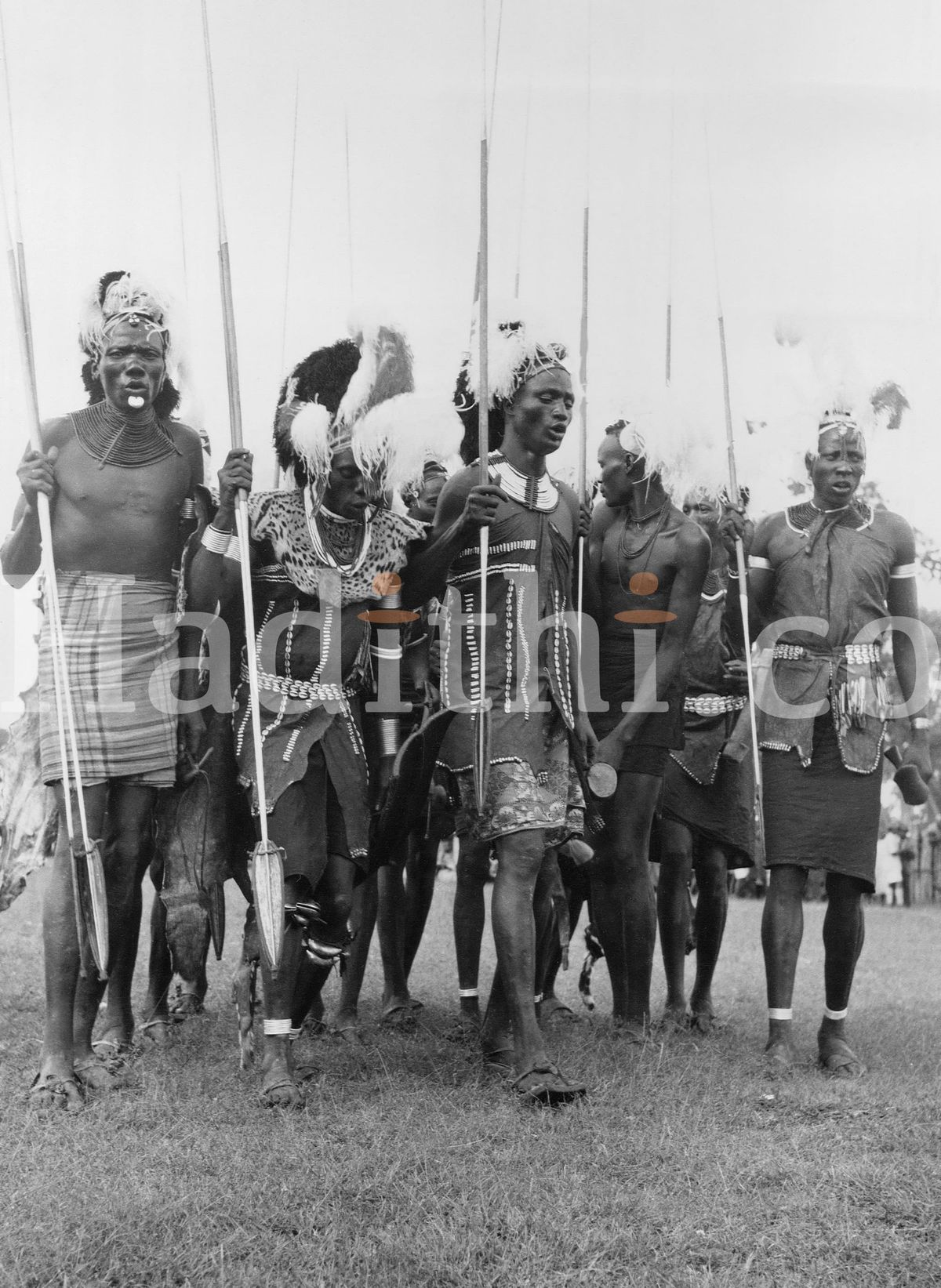
There is a word that appears again and again in this story. It made everything possible. It was later used to close the courthouse door. The word is treaty.
Under international law, a treaty is a formal and binding agreement between two self-governing entities, both recognised as having authority to make long-term decisions. In the early twentieth century, the British colonial government signed two treaties with Maasai leaders.
The 1904 Maasai Agreement. This moved the Maasai from large parts of the central highlands, areas that today include places like Naivasha, Nakuru, and Laikipia in modern-day Kenya, into two main reserves:
- A northern reserve in Laikipia (still in present-day Laikipia County)
- A southern reserve in areas that today include Kajiado County and parts of Narok County
The 1911 Maasai Agreement. This is where everything changed. The British decided to move the Maasai again, this time completely out of Laikipia and into the southern reserve. They were pushed into areas around Ngong, Kajiado, and Narok, which were semi-arid and less fertile than the highlands they had occupied before.
Here is the paradox that sits at the center of this story.
When Britain signed the 1904 agreement, it was either intentionally or unintentionally treating the Maasai as a people with authority over their land. That’s what made the agreement legally meaningful. But in 1911, Britain broke that earlier promise. The Maasai challenged this in court. And the court refused to help them.
Why? Because the court held that the agreements were between sovereign entities, and therefore fell outside the jurisdiction of a British domestic court.
What Existed Before
A Nation, Not a Wandering Band
Before Kenya, Tanzania, and any border on a modern map, there was a nation.
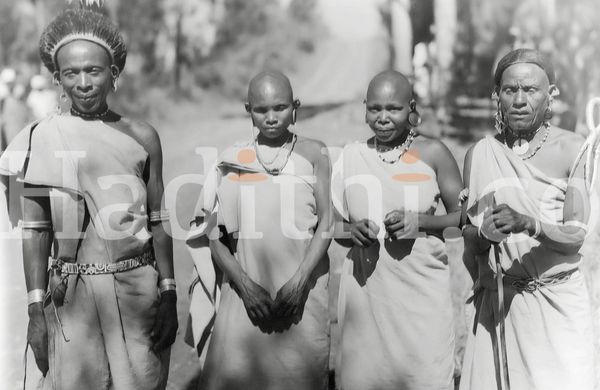
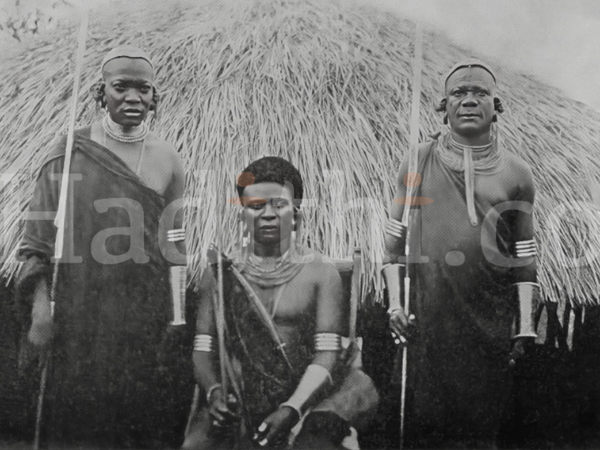
The Maasai were not a marginal, wandering nomadic group. At the height of their power in the mid-nineteenth century, they controlled a vast territory of the East African Rift Valley. Arab and Swahili ivory caravans deliberately detoured to avoid their land. The Scottish explorer Joseph Thomson attempted to cross Maasailand in 1883 and became only the second European to succeed, and only because he paid tribute in livestock at the border.
Britain's first Commissioner of Kenya, Sir Charles Eliot, wrote that the Maasai were a dominant power in East Africa, resisting slave traders, extracting tribute, and asserting authority across a vast territory. This assessment was consistent with how European observers of the period understood Maasai power.
Their society was organised through an age-set system, groups of men born in the same period who moved through life stages together, from boys to moran (warriors) to elders. Decision-making rested with councils of elders. There was no single king, no hereditary executive ruler. Leadership was distributed, experience-weighted, and built on consensus.
Above the elders sat the laibon, a spiritual leader and prophet. The laibon's authority did not derive from family inheritance but from community belief in prophetic and ritual power. The position was not strictly hereditary, though it ran through specific lineages. The laibon interceded with Enkai, the Maasai God, on behalf of the community.
The Maasai belief that Enkai had given them all cattle on earth was not symbolic. It meant herding was a sacred trust, not merely an economic activity. To be separated from their land was not simply to lose territory; it was to break a covenant.
The Civil War That Made the British Possible
Mbatian: The Prophecy and the Deathbed
To understand how Britain was able to do what it did, you must go back to 1890, the year the greatest laibon in Maasai history died.
Mbatian had guided the Maasai through their most successful military campaigns and unified their previously warring sections. He held this position for approximately 24 years, succeeding his father, Supeet, around 1866. He is said to have foretold European colonisation, describing a powerful force that could not be defeated through traditional means, and the coming of an "iron snake" that would stretch across Maasai land and split it in two.
That prophecy came true with the construction of the Uganda Railway in 1901, which ran through the heart of Maasai territory and ultimately divided their people into separate regions, disrupting their land, movement, and way of life.
The Succession Deception and the Civil War It Caused
As Mbatian lay dying, he intended for his elder son, Senteu, to receive the symbols of leadership. But Lenana's mother overheard this plan. She woke Lenana early and sent him to his father's hut before Senteu arrived. Mbatian, old, with failing eyesight, gave the medicine man's insignia to Lenana, believing him to be Senteu. When Senteu arrived and was told what had happened, he declared that he would not be a subject to his brother and that he would fight him till he killed him.
This mistake led to a dispute between the two brothers and later a conflict over leadership.
Mbatian died in 1890 and was buried at Oldonyo Orok, Black Hill, in today's Namanga hills, on the Kenya-Tanzania border. With his death, the succession dispute exploded into open civil war.
The war between Lenana and Senteu was not brief. It lasted over a decade. Multiple historical accounts state that it reduced the Maasai population by half. Senteu's faction suffered most: disease broke out among his people after he moved south, into what is today northern Tanzania, specifically the Monduli and Arusha area, precisely fulfilling Mbatian's dying prophecy. Their cattle perished. They were then defeated in battle by German colonial forces in Tanganyika (present-day Tanzania).
In 1894, Lenana, still fighting, weakened, and simultaneously under attack from the Kikuyu on the east, made a decision that would define the rest of his life and reshape the history of his people. He went to Fort Smith, which was the British East Africa Company's garrison near present-day Nairobi, and asked for military protection.
The British accepted immediately, as they needed the Maasai to remain neutral during the construction of the Uganda Railway. Lenana gave them that.
In 1898, when Senteu's warriors crossed the border from German Tanganyika to attack again, the British formally made Lenana the Paramount Chief of all the Maasai. This title did not exist in traditional Maasai governance. The Laibon held spiritual authority, not executive political power. The British invented it to create a single point of authority with which to negotiate. Lenana accepted it because it gave him the legitimacy he needed to finally end the civil war.
By 1902, Senteu and his factions surrendered and begged to be allowed back. Peace was made. But Lenana had spent every card in his hand. The British now came for the land.
The People Who Made It Happen:
History Is Made by People, Not Forces
Sir Charles Norton Eliot
Sir Charles Norton Eliot was the first Commissioner of the British East Africa Protectorate, effectively its chief executive, responsible to the Colonial Office in London. He arrived in 1900 with a vision: this would be a white man's country. He wanted the fertile Rift Valley, the heartland of Maasai territory, to be opened for European settlers from Britain and South Africa.
He did not keep his views private. In April 1904, in a letter to Lord Lansdowne, Sir Charles Eliot made it clear that he saw Maasai society as violent and harmful, and believed it would be better if it disappeared completely.
This was not just his opinion. Around the same time, other colonial writings, including those in the Natal Witness, showed a similar attitude, suggesting that the Maasai and other African societies would naturally decline under British rule, and that this was something to accept rather than question.
He began issuing land concessions to European settlers, most importantly to the East Africa Syndicate, a company backed by financiers from the British South Africa Company, which applied for 320,000 acres (approximately 1,300 square kilometers) of the highlands. Some colonial officers within the administration raised concerns about the need to consider Maasai land rights, showing that even within the British system, there was disagreement over how their land was being taken. The controversy became a scandal. Eliot was forced to resign as Commissioner in 1904. But the machinery he set in motion kept turning long after he left.
Lord Delamere: The Settlers' King:
Hugh Cholmondeley, 3rd Baron Delamere (born 28 April 1870, Vale Royal, Cheshire; died 13 November 1931, Nairobi), was the central figure of European settler society in colonial Kenya for nearly 30 years.
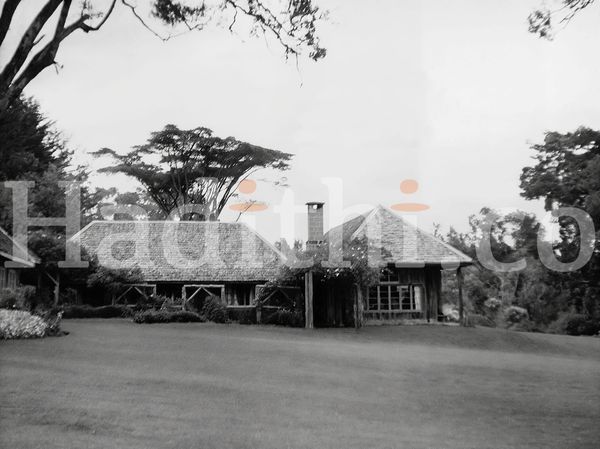
He first arrived in East Africa on a hunting expedition in 1897. He settled permanently in 1902. His early attempts to acquire land were refused first because his proposed location was too remote, and later because a second request for 100,000 acres near present-day Naivasha was denied by the government, which feared conflict with the Maasai who occupied the area. His third application succeeded: a 99-year lease on 100,000 acres that he named Equator Ranch, near what is today Naivasha, Nakuru County, requiring him to pay £200 annual rent and spend £5,000 on improvements in the first five years.
Why were settlers claiming such enormous acreages? The mechanism was the Crown Lands Ordinance of 1902, which defined all land not under active cultivation, including Maasai seasonal grazing territories, as Crown Land, available for lease or sale to settlers. Settlers applied to the Land Office of the Protectorate and were granted concessions. The East Africa Syndicate's 320,000-acre application was part of a broader colonial economic strategy: the Uganda Railway had cost the British Treasury enormous sums, and European agricultural settlement was deemed the only way to make the Protectorate financially self-sustaining.
Delamere was elected the first president of the Farmers' and Planters' Association in 1903 and served as the unofficial leader and spokesman of white settlers for 25 years. His brother-in-law, the Hon. Galbraith Cole, son of the 4th Earl of Enniskillen, had his own pre-1904 land claims on the Laikipia Plateau. Both men had applied for Laikipia land before the 1904 Agreement was signed. Both were asked to surrender those claims when Laikipia became the Maasai northern reserve. Their claims were formally recognised by the Land Office in April 1910, which was one of the triggers for the second agreement that followed in 1911.
Errol Trzebinski describes Delamere as “the Rhodes of Kenya,” comparing him to Cecil Rhodes, a key figure in British expansion in southern Africa. In simple terms, it means Delamere played a similar leading role in shaping settler power in Kenya
The Governor Who Lied: Sir Percy Girouard
Sir Édouard Percy Cranwill Girouard (born 26 January 1867, Montreal; died 26 September 1932) was a French-Canadian railway engineer who had built military railways in Sudan for Kitchener, served as High Commissioner of Northern Nigeria, and was appointed Governor of the East Africa Protectorate in 1909. Winston Churchill had praised him in The River War (1899) as an extraordinarily capable man.
Upon the arrival of Percy Girouard in Nairobi in 1909, Lord Delamere led the ceremony and read the official welcome address, suggesting the strong influence he already held at the time. From day one, the relationship between Girouard and Delamere was one of ideological alignment.
As the Canadian Journal of History notes (Mwaruvie, 2006): "In Kenya, Sir Percy Girouard is associated with the debacle of the Second Maasai Agreement of 1911, which led to their forceful removal from the fertile Laikipia plateau to semi-arid Ngong. The Maasai land alienation policy ended his spectacular career."
He resigned in 1912 after his deceptions were exposed by Dr. Norman Leys and the resulting storm in the British Parliament.
The Whistleblower: Dr. Norman Leys
Norman Maclean Leys (born Liverpool, 1875) was a Scottish doctor who had trained at the University of Glasgow. He joined the colonial medical service in 1901 and arrived in British East Africa in 1905, serving at postings including Mombasa, Nakuru, and Fort Hall (present-day Muranga town, Muranga County).
His Christian Socialist beliefs shaped his commitment to racial equality at a time when such views were professionally risky. In his obituary, the Manchester Guardian described Norman Leys as “a fiery and determined prophet on colonial affairs,” recognizing him as one of the few voices willing to openly challenge colonial policies in East Africa.
From within the colonial system, Norman Leys witnessed the dispossession of the Maasai firsthand and began exposing it through a series of letters to British officials and MPs. Among them was Edmund Harvey, a parliamentarian known for his commitment to justice and equality, who took these warnings seriously and helped raise the issue in Parliament.
Leys’ letters brought attention in Britain to what was happening in East Africa, sparking debate and criticism of colonial policy. As noted by Lotte Hughes (2022), this pressure contributed to a temporary delay in the removal of the Maasai from Laikipia though the policy was ultimately carried out.
He also introduced Ole Gilisho to lawyer Alexander Morrison, the connection that made the lawsuit possible.
As Lotte Hughes shows from archival research, colonial authorities believed that Norman Leys had encouraged legal resistance against their policies. As a result, he was pushed out of East Africa in 1913 through a transfer to Nyasaland (present-day Malawi). He was not formally dismissed, but the move effectively ended his career in the colonial service.
After returning to Britain, Leys published Kenya in 1924, a major anti-imperialist work that went through multiple editions and played a key role in shaping how critics in Britain understood settler colonialism.
The Warrior Who Became a Legal Case: Parsaloi Ole Gilisho
Parsaloi Ole Gilisho was a senior warrior from the Purko section, one of the Maasai's main territorial divisions.
For context, the Maasai were not one single, unified political group. They are organized into sections (regional communities), each with its own leadership, grazing lands, and internal structure. The Purko were the largest and most influential of these sections, occupying central areas of Maasai territory (in present-day southern Kenya). Because of their size and location, they often played a leading role in Maasai politics, decision-making, and resistance.
Within the Purko section, Parsaloi Ole Gilisho held the role of ol-aiguenani, a spokesperson for his age-set (a group of men of the same generation). Among the Maasai, age-sets are an important system of organization in which men move through life stages together and take on shared responsibilities. As an ol-aiguenani, he spoke on behalf of his group at community meetings, in negotiations, and in disputes. He was chosen for this role not because of formal education, but because of his ability to speak well, his courage, and the respect he held within his community. Like many leaders in traditional Maasai society at the time, he was not literate and had never attended school, yet he held an important political and social position. The British anglicised his name as Legalishu. Say it aloud. He gave the British a legal issue and a 110-year headache.
Here is the detail that makes his story extraordinary: Ole Gilisho had been one of the signatories of the 1904 Agreement itself; his name appears in the original document as 'Legalishu, Leganan of Elburgu.' He had put his thumbprint on the first treaty. When he went to court, he was not just challenging the British. He also argued that the agreement he had himself signed was still in force and that the British had violated it.
The 1904 Agreement: The Promise Written in Disappearing Ink
On 10 August 1904, in Nairobi, Laibon Lenana and about 20 Maasai chiefs and section representatives placed their thumbprints on an agreement. With that act, they agreed to give up the Rift Valley, the geographic heart of their land, in exchange for two designated reserves.
The document stated that this was done of their “own free will.” But the reality on the ground tells a different story. At a meeting in Naivasha before the signing, Maasai warriors reportedly said they would rather die than leave their homes. Many resisted the move entirely and had to be pressured for years afterward.
Still, the Maasai secured one critical condition in the agreement, a promise meant to protect them:
“We would, however, ask that the settlement now arrived at shall be enduring so long as the Masai as a race shall exist, and that European or other settlers shall not be allowed to take up land in the settlements.”
This clause was meant to guarantee that the land set aside for the Maasai would remain theirs permanently, free from settler encroachment. This clause was not incidental. This was the entire basis of the deal. The Maasai were being asked to vacate miles of ancestral territory. The written, permanent guarantee of their two reserves was the only thing they received in exchange. Every Maasai word, every act of resistance, every lawsuit that followed, all of it points back to this one clause.
Britain broke it in seven years.
The 1911 Agreement: ,How a Governor Lied His Way to More Land
What Laikipia Was and Why Settlers Wanted It
The Laikipia Plateau, then the Maasai’s northern reserve, in what is today Laikipia County, Kenya, was not just land. It was some of the most valuable land in the region. Covering roughly 9,700 square kilometers, it was highland: cool, well-watered, and free from East Coast Fever, a livestock disease common in lower areas. In simple terms, it was ideal for large-scale farming and ranching, the kind of land European settlers were looking for.
In February 1911, the Acting Chief Veterinary Officer, Francis Brandt, visited Laikipia to investigate claims of disease. He found none. There was no East Coast Fever. Soon after, plans to remove the Maasai were pushed forward, a timing that, as historian Lotte Hughes notes, was “surely no coincidence.” At the same time, land claims made before 1904 by settlers like Lord Delamere and his brother-in-law were formally recognised by the Land Office. The pressure to make Laikipia available to settlers was building. And Percy Girouard was expected to deliver.
The Deception - Documented in Girouard's Own Record
Percy Girouard wrote to the Colonial Office in London claiming that the northern Maasai were willing to move south, that the relocation was their own idea, a request to reunite with their people. But this was not true. At the same time, he withheld critical information.
In 1910, an officer named Arthur Collyer prepared a Report on the Masai Question, examining whether a second relocation was justified. The report raised serious objections. Instead of sending it to London, Girouard delayed it for about 18 months, by which time its recommendations could no longer influence the decision. As historian Lotte Hughes notes, this delay “amounted to criminal deceit,” as it made the report effectively useless.
As a result, the Colonial Office made its decisions based almost entirely on Girouard’s version of events. According to Hughes, officials in London were “lied to on many occasions” about key issues, whether the Maasai had agreed to move, why the second relocation was necessary, and whether promises of highland land had already been made to European settlers.
The Signature of a minor
On 4 and 13 April 1911, the Second Maasai Agreement was signed. Among the Maasai signatories was Segi (or Seggi), identified in the document as representing the Paramount Chief.
Segi was the son of Laibon Lenana. But Lenana had died on 12 March 1911, just weeks before the first signing. In contrast, the 1904 agreement had been signed by Lenana himself, at the height of his authority, and with the involvement of multiple Maasai leaders.
The 1911 agreement, which effectively overrode the earlier guarantees, was therefore concluded without him. Instead, it was signed in part by his son, who, as historian Lotte Hughes argues, was a minor and not of equivalent authority. Hughes notes that if the second agreement was meant to amend the first, it should have been signed by the same leaders, not by a young representative. She further points out that Lenana’s name and thumbprint do not appear on the document, having been replaced by those of his son.
The timing is critical: the first signing took place only about three weeks after Lenana’s death, raising serious questions about representation and consent.
The result was the large-scale redistribution of Laikipia, the Maasai’s northern reserve, into European settler hands, including leading figures such as Lord Delamere and R. B. Cole.
What the Move Cost In Human Terms
The forced removal of the Maasai from Laikipia, their northern reserve in central Kenya, to the extended southern reserve began in 1911 and was largely completed by 1913. The people were moved into areas that today form Narok and Kajiado Counties in modern-day Kenya.
This was not a voluntary relocation. It was part of a broader colonial policy to clear fertile land in the Rift Valley for European settlers, breaking earlier promises that the Maasai would retain Laikipia “for as long as the Maasai as a people shall exist.”
The operation on the ground was led by British officials, including E.D. Browne, referred to by the Maasai as “Bilownee”, acting as a migration officer, supported by armed askaris. The journey itself was harsh. It required crossing the Mau Escarpment, a steep highland barrier, under pressure and force.
Accounts recorded later describe the movement as violent and coercive. As one Maasai eyewitness, Thomas Ole Mootian, recalled in an interview documented by Lotte Hughes:
“We were pushed by force, by a white man called Bilownee [British official E.D. Browne], accompanied by African soldiers. The askaris were holding guns, they were beating the people. When you stopped, they hit you with the butt of a gun. And if women made a joke or became lazy, they were caned. And when sheep or cows became weak, they were killed.”
Other accounts tell the same story: people were forced to march at gunpoint, beaten when they slowed, and their cattle, at the heart of Maasai survival and identity, were killed if they could not keep up.
The losses were severe. Many animals died along the way, and the southern reserve exposed herds to diseases such as East Coast Fever, conditions that had not affected them in Laikipia. The move also entailed a significant loss of land, with large portions of Maasai territory opened to settler occupation. Some families that never completed the journey and were later absorbed into the colonial economy, working as herdsmen on settler farms established on what had once been their own land.
The human cost is harder to measure as there were no formal records partially because in earlier times, some communities, including the Maasai and the Agĩkũyũ, often avoided counting people directly, as it was believed to carry social and spiritual consequences. This makes it difficult to establish precise figures.
Civil Case No. 91: The Lawsuit That Almost Changed Everything
By 1911, the British had already decided what was going to happen. The Maasai would be removed from Laikipia. The land would be opened up. In their minds, the outcome was settled.
But on the ground, something else was happening.
A man named Parsaloi Ole Gilisho, recorded in the 1904 agreement as “Legalishu, Leganan of Elburgu,” was doing something the system did not anticipate. He was turning it into a legal case. He was a pastoral warrior, with no formal education and no place in the colonial system as it was designed to work. And yet, he was hiring lawyers, drafting affidavits, and preparing to challenge the British Crown.
This did not happen by accident. It began with a connection.
A young Maasai student, Stephano Ole Nongop, was in Mombasa by 1912, studying at Buxton High School. One of the first Maasai to receive a Western education, he was also working as an interpreter for a lawyer, Alexander Morrison.
Stephano had been placed there by his employer, George Wright, a missionary.
At the same time, Norman Leys recognised that the Maasai needed legal representation. He encouraged Morrison to take the case and helped connect him to Ole Gilisho, setting in motion one of the most unexpected legal challenges of the colonial period. For Parsaloi Ole Gilisho, this was not just a case. In a society where cattle were wealth, survival, and identity, raising money meant risking everything
The colonial administration responded quickly.
Maasai were prevented from selling cattle to raise legal fees, and the Southern Reserve was placed under quarantine, officially for disease control, but with the effect of cutting off their main source of wealth.
In practice, this made it extremely difficult for the Maasai to sustain their case.
The Three Arguments: Claims Filed in Court
The case is commonly cited as Ol le Njogo and 7 Others v. The Honorable Attorney General and 20 Others, Civil Case No. 91 of 1912. The plaintiffs argued, first, that the 1904 agreement remained in force and that the 1911 agreement could not override its guarantees; second, that those who signed in 1911 had no authority to alienate the interests of minors and unborn children; and third, that the later agreement lacked valid consent and was affected by duress and defective representation. They also sought the return of Laikipia and £5,000 in damages for livestock losses.
The British Response: Blocking the Case
The British government did not just defend itself in court. It worked to make the case harder to continue. According to Lotte Hughes, people involved in the case faced pressure and intimidation. Parsaloi Ole Gilisho was threatened, and Europeans who supported the Maasai, including Norman Leys and the lawyers, were closely watched and questioned.,
At the same time, the government made it difficult for the Maasai to raise money. The Southern Reserve was placed under cattle quarantine. Officially, this was to control disease. But in practice, it stopped the Maasai from selling cattle, their main source of wealth. Movement was also controlled. It became harder for the Maasai to meet their lawyers or travel to organise the case.
The pressure went further. In 1913, Leys was transferred to Nyasaland (present-day Malawi). After that, his career in the colonial service never recovered. There are also accounts suggesting that plans to take the case to London were stopped. Ole Gilisho had hoped to appeal to the Judicial Committee of the Privy Council, the highest court in the British Empire. But according to later testimony, threats and obstacles made that journey impossible.
The Internal British Panic Evidence That They Knew They Might Lose
Evidence from Lotte Hughes shows that British officials were not fully confident in their position. Her research, based on internal records from the Colonial Office (files held at the National Archives in Kew, London), reveals that officials were already discussing the possibility of compensation.
That detail is important.
You only discuss compensation if you believe there is a real chance you might lose.
In this case, it suggests that the government understood the Maasai claim had legal weight and that if the case reached a higher court, such as the Judicial Committee of the Privy Council in London, the outcome might not go in their favor.
The response, however, was not to settle the issue.
Instead, the effect of their actions was to ensure that the case never reached that stage.
The Ruling and Its Devastating Irony
On 26 May 1913, Justice R.W. Hamilton delivered his judgment in the Maasai case and dismissed it.
In his ruling, later published in the American Journal of International Law (Vol. 8, No. 2, April 1914), Hamilton made a crucial distinction. He argued that the Maasai agreements were not ordinary legal contracts between individuals and the colonial government. Instead, they were treaties between the British Crown and the Maasai as a distinct people.
As he explained:
“The Masai Agreements are not constituting legal contracts… but rather treaties between the Crown and the representatives of the Maasai… The Maasai are a nation distinguished by a similar language and government.”
That reasoning had a decisive consequence. Because the agreements were treated as treaties rather than contracts, the court held that it had no authority to intervene.
Read that carefully.
To dismiss the case, Hamilton had to accept what the Maasai had been arguing all along, that they were a people with their own identity and system of governance. In other words, he recognised them as a nation. But instead of helping their case, that recognition was used to deny it.
That is the contradiction at the center of this story.
The same idea that gave the agreements weight, treaty, nation, sovereignty was used to close the door on justice.
The Maasai were treated as a people with authority when the agreement was made. But when that agreement was broken, that same status was used to say the court could not step in.
Meanwhile, the next step an appeal to the Judicial Committee of the Privy Council in London, the highest court in the British Empire never happened. Such a hearing could have brought the case before the Empire’s top legal minds and given it international attention.
But it did not take place.
Parsaloi Ole Gilisho never made the journey. His cattle, the source of funding for the case, were restricted. Plans to travel were stopped. The case ended where it stood. The judgment was later published in 1914, and historians have since recognised it as one of the earliest known legal challenges by an indigenous community against colonial rule in East Africa, as noted by Lotte Hughes.
Conclusion: The Land That Was Never Returned
The story did not end in 1913. The land at the center of the dispute the Laikipia Plateau did not return to the Maasai. At independence in 1963, it passed to the Kenyan state and was redistributed through government systems, often in ways that did not restore it to its original occupants. Over time, Maasai leaders continued to press for recognition and compensation. In 2004, they formally raised claims for the loss of Laikipia land, while figures such as Francis Ole Kaparo, himself from the region, emerged as prominent voices arguing that the question of land had never been resolved. More than a century later, the issue remains open not only in law but also in memory.
At the same time, some of East Africa’s most famous landscapes, the Maasai Mara National Reserve, Amboseli National Park, and beyond, sit on land historically used and managed by Maasai communities. What is now presented as untouched wilderness was, in reality, shaped over generations through pastoral systems that balanced grazing and ecology. Yet the written record of this history largely reflects colonial voices, while Maasai oral tradition tells a different story, one of broken agreements and land that was never truly given up. The 1913 case was dismissed, and it has never been reopened. But its central question, who had the right to that land, and whether that right was lawfully taken, points to a clear conclusion: the Maasai were the original owners and held the rightful claim to that land.
Sources and Further Reading
Masai Agreement (1904 and 1911): Full texts, One More Voice Archive, digitised 2023 (onemorevoice.org).
Ol le Njogo and Others v. The Attorney General and Others, Civil Case No. 91 of 1912. Judgment published: American Journal of International Law, Vol. 8, No. 2 (April 1914), pp. 380–389 (JSTOR: stable/2187148).
Eliot, Charles. Letter to Lord Lansdowne, 9 April 1904. Eliot in Natal Witness, 24 October 1903. Both quoted in Hughes (2006).
Bodleian Archives: 'Three Letters from Dr Norman Leys,' MS. Eng. c. 7963, University of Oxford.
Hughes, Lotte. Moving the Maasai: A Colonial Misadventure. Palgrave Macmillan, St Antony's Series, 2006. Open-access chapter: Open Research Online, Open University (oro.open.ac.uk/7869).
Mwaruvie, John M. 'Kenya's Forgotten Engineer and Colonial Proconsul.' Canadian Journal of History, Vol. 41, No. 1, 2006.
Kabourou, Aman W. 'The Maasai Land Case of 1912: A Reappraisal.' Transafrican Journal of History, Vol. 17, 1988.
Leys, Norman. Kenya. London: Hogarth Press, 1924 (four editions).
Hughes, Lotte. 'Moving the Maasai: Tanzania is Repeating Kenya's Colonial Past.' The Conversation / Open University, 2022.
Hughes, Lotte. '2023 Marks 110 Years Since the Maasai Case 1913: Does it Still Matter?' The Elephant, Kenya, September 2023.
Daily Nation Kenya: 'How 110 Years of Colonial Mischief Left Behind a Troubled Land in Laikipia' (2021); 'How Maasai Signed Away Laikipia' (Nation Africa, 2020).
Standard Media Kenya: 'How the British Tricked Maasai Families Out of Laikipia Land' (2018); 'Delamere's Love for the African Standard.'
Intercontinental Cry Magazine: 'Elusive Justice Maasai Contestation of Land Appropriation in Kenya' (2006/2025).
Old Africa Magazine: 'What Brought Lord Delamere to Kenya?'
Google Arts & Culture / National Museums of Kenya: Shujaa Stories 'Mbatian', 'Lenana', 'Senteu' (2019).