Naming the Dead into the Living: Agĩkũyũ Naming Customs and the Recycling of Generations
Among the Agĩkũyũ, giving a child a name was never a small thing. It was a way of keeping ancestors alive, sealing agreements between families, and passing on rights to land, all at once, without a single piece of paper.
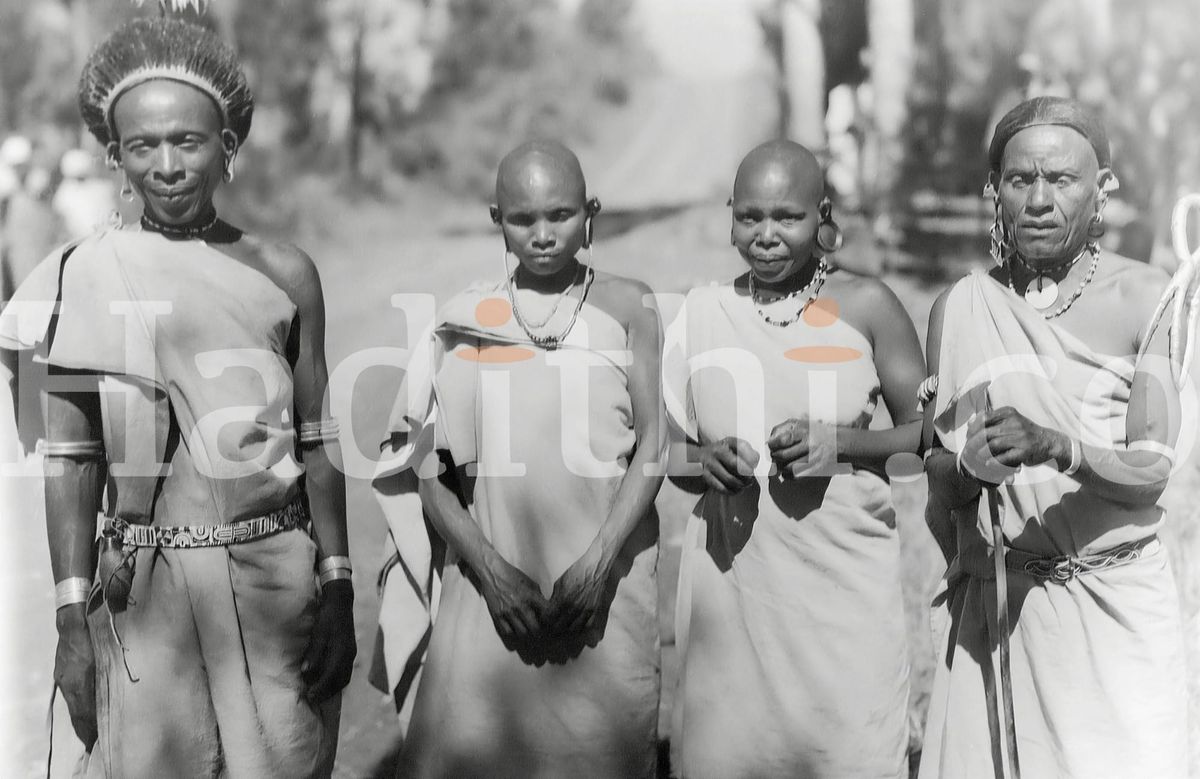
Names mean different things in different societies
When most people think about names today, they think of them as labels. Parents pick a name because it sounds good, or it is popular that year, or it honours a favourite aunt. Once the child grows up, the name is just theirs, it does not come with obligations or connect them to anyone in particular. In the modern world, a name is mainly useful for telling one person apart from another.
But this is not how all societies have understood names. For the Agĩkũyũ people of central Kenya, the people also known as the Kikuyu, a name was one of the most important things a person could carry. It told you exactly who someone was related to, which family they belonged to, and even what land they had a connection to. Understanding this requires taking a step back and looking at how the whole system worked.
The Agĩkũyũ lived in a society with no written records. There were no birth certificates, no family registers, and no government databases. Everything that needed to be remembered about a person, their family tree, their clan membership, their rights and responsibilities, had to be stored and passed on through memory and oral tradition. The naming system was one of the key tools they used to do this.
How the naming system worked
The Agĩkũyũ naming system followed a clear and fixed order. Parents did not simply choose names they liked. Each child in a family was named after a specific relative, following a pattern that had been established for generations.
The first son born in a family was named after the father's father, that is, the paternal grandfather. The first daughter was named after the father's mother, the paternal grandmother. The second son was named after the mother's father, the maternal grandfather. The second daughter was named after the mother's mother, the maternal grandmother. After all four grandparents had been honoured, naming continued with uncles, aunts, and other close relatives from both sides of the family.
To make this concrete, imagine a couple, Kamau and Wanjiku. Their first son would carry Kamau's father's name, say Waweru. Their first daughter would carry the name of Kamau's mother. Their second son would carry Wanjiku's father's name, say Mwangi. Their second daughter would carry Wanjiku's mother's name. By the time they have four children, both families, both the husband's side and the wife's side, are already represented in the names of those children. Each child is, in a sense, a walking record of where they come from.
Names as a family record-keeping system
One of the most important things the naming system did was keep family history alive without any writing. In a society that depended entirely on oral tradition, a person's name was their genealogical document. If you met someone and knew their name and whose child they were, you could work out exactly how they were connected to other families in the community.
Think of it like a family tree. If someone was introduced to you as Waweru, son of Kamau, and you knew the naming rules, you immediately knew that this Waweru was named after Kamau's father. That told you who the grandfather was, which family line the person came from, and by extension, which clan they belonged to. This information was not just interesting; it was practically important. It determined who you could marry (you could not marry within your own clan), who you had obligations to, and who had obligations to you.
What is remarkable is that this system worked continuously, without anyone needing to maintain it. As long as parents kept naming their children after grandparents, the information kept moving forward through the generations. Every person born into the system was simultaneously a product of that information and a carrier of it.
The special relationship between a child and their namesake
Beyond just record-keeping, the naming system created a very specific bond between a child and the grandparent whose name they carried. This was not simply a matter of sentiment. It was a recognised social relationship with real meaning and real responsibilities on both sides.
The grandparent who saw a grandchild named after them took a special interest in that child. And the child, as they grew up, was understood in some sense to be continuing the grandparent's presence in the world. Jomo Kenyatta, in his 1938 book Facing Mount Kenya, describes this as a thread of identity, not full reincarnation, but a genuine continuation. The grandparent was not simply gone; they lived on in the person who carried their name.
This also had a spiritual dimension. The Agĩkũyũ believed that the spirits of deceased relatives remained active in the lives of their descendants. When a child was named after a deceased grandparent, this was understood to invite that ancestor's spirit into the child and into the household. The naming ceremony was therefore a spiritual event as much as a social one.
Names, marriage, and the alliance between families
There is another layer to the naming system that is easy to miss: it was also a formal statement about the relationship between two families. Among the Agĩkũyũ, marriage always happened between members of different clans; you could not marry someone from your own clan. Every marriage, therefore, brought two separate family groups into a formal relationship with each other.
The naming of children was how that relationship was publicly acknowledged and kept alive. When the second son was named after the maternal grandfather, it meant a child of the father's clan was now carrying the name of the mother's ancestors. This child was, in a very real sense, a bridge between two families. Their very name declared the bond.
This mattered practically because families in the same area often had disputes, over land boundaries, water rights, or inheritance. When such disputes came up, the network of named relationships was part of the social fabric within which people negotiated. A man whose name honoured your grandfather was not a stranger. He was someone you had a named, remembered connection with, and that connection had weight.
Names and the ownership of land
Perhaps the most surprising connection is between the naming system and land. At first glance, these might seem unrelated. But in Agĩkũyũ society, they were deeply linked.
Land among the Agĩkũyũ was not owned by individuals, it was held collectively by a patrilineal lineage group called the mbari. The founder of the mbari had originally cleared or purchased the land, and all his descendants held rights in it. The first son, named after the paternal grandfather, was not just carrying a name, he was also carrying forward the line of descent that determined who was a member of the mbari and who therefore had rights to the land (called the githaka).
In a post on marriage and inheritance, children named after paternal ancestors are considered rightful members of the father's clan and therefore heirs to that clan's land. At a spiritual level, the land belongs to the ancestors and the child who carries an ancestor's name is the living link between those ancestors and the land they held. This is not a metaphor. It is the basis on which land claims were understood and defended.
This is also why, when colonial administrators arrived and began taking land that appeared 'empty,' they were misreading the situation so badly. The names of the children living on that land, or who had been displaced from it, were themselves a form of title deed. They encoded the lineage claim that the colonial land registry completely ignored.
The naming ceremony
The actual giving of a name was a communal occasion, not a private family moment. It usually happened a few days after a child was born, once it was clear the baby was likely to survive. Both the father's family and the mother's family were invited. Beer was brewed. Senior elders came to witness.
The child was brought forward, and the name was spoken aloud, formally and publicly. The gathered family confirmed it, this child is Waweru, this child carries forward the name of the one who bore it before. Both families participated, and the occasion was as much a formal recognition of the alliance between the two lineages as it was a naming of one child.
The ceremony made the name official in the fullest social sense. A name received in this way was not just a label; it was a covenant, witnessed by the living and invoking the dead.
More than one name: birth-order names and circumstantial names
It is worth noting that Agĩkũyũ children did not have just one name. The lineage name, the name inherited from a grandparent, was the most important, but children also received what scholars call birth-order names. These indicated where the child fell among their mother's children: first-born, second-born, and so on. These names were more practical than meaningful, useful in large households where many children of similar ages lived together.
On top of this, there were circumstantial names, names that marked the conditions of a child's birth. A child born during a famine might receive a name connected to that event. A child born during a period of raids might carry a name that remembered it. Twins received specific paired names. All of this meant that a respected elder might be known by several names depending on who was speaking to them and what relationship was being invoked. The choice of which name to use was itself a social signal.
The bigger cycle: Mwangi and Irungu
The individual naming system was part of an even larger pattern in Agĩkũyũ society. Social life was organised around named generation-sets called riika, groups of people who were initiated into adulthood at roughly the same time. These generation-sets alternated between two names: Mwangi and Irungu for men, and Mboĩ and Wanjirũ for women. A man's son belonged to the opposite name-group. His grandson belonged to the same one.
This larger cycle, interestingly, reinforced the individual naming system. Because the first son was named after the paternal grandfather, and because the generation-set system also meant grandson and grandfather shared the same group name, there were two layers of connection linking the same two people. Personal name and generational name pointed in the same direction: toward the idea that time moved in a spiral rather than a straight line. The grandfather did not just vanish into the past; he came around again, in the grandchild's name and in the grandchild's generation set.
This cycling pattern shaped how the Agĩkũyũ thought about time and governance. The itwika ceremony, the formal transfer of political authority from one ruling generation to the next, was also built on this alternating logic. The idea that the dead were not behind you, but coming around again, was structural, not just poetic.
What colonialism did to the naming system
The Agĩkũyũ naming system was not just a cultural habit that could be changed without consequences. It was woven into land tenure, kinship, and spirituality all at once. When colonial rule began dismantling those connected systems, the naming system was damaged along with everything else.
Christian missions pushed converts to take Christian names, either alongside or instead of their ancestral ones. The logic was that the old name carried the weight of the old religion and the old way of life. Many Agĩkũyũ ended up navigating between two names in different contexts, using one at home and another at school or church. Over time, the ancestral name lost much of its social depth as the systems that gave it meaning, the mbari, the kiama courts, and the age-grade structure, were weakened by colonial administration.
The land alienations were even more direct in their impact. The Crown Lands Ordinance of 1915 declared large amounts of Agĩkũyũ land to be 'waste' and available for European settlement. Families were displaced from land their ancestors had cleared and named. A child could still be named Waweru after his grandfather, but the githaka that name had always quietly pointed to was now registered in a colonial land office under a European farmer's title.
Kenyatta understood this clearly. His careful documentation of naming customs in Facing Mount Kenya was partly a political act: he was recording evidence of a property system that colonial law had chosen not to see. The chain of names was a chain of inheritance, and it had been broken without acknowledgment.
What this means in Kenya today
The Agĩkũyũ naming system has not completely disappeared. In many families across Kenya today, firstborn sons are still named after the paternal grandfather. The pattern is recognisable even when the full institutional framework around it has faded. This is worth noting, it suggests the underlying logic of the system was strong enough that the form has survived long after most of the institutional structures supporting it were dismantled.
But the meaning has changed. In contemporary Nairobi, a man named Waweru after his grandfather might carry that name with genuine affection and some awareness of its origin. What he is unlikely to carry is the full weight of obligation, spiritual connection, and land claim that once came with it. The name persists, but emptied of much of what it once held.
Conclusion: a technology that ran on people
Looking at the Agĩkũyũ naming system as a whole, what stands out is how much work one simple practice was doing. By naming children after grandparents in a fixed sequence, this society managed to accomplish several things simultaneously: it preserved genealogical memory across generations, it formally acknowledged alliances between families at every birth, it maintained spiritual continuity between the living and the dead, and it encoded land claims in the persons of the children who would eventually inherit those claims.
All of this was achieved without writing, without courts, without a bureaucracy, without any external infrastructure at all. The system ran on people. Every named person was, in a sense, a node in a living network of stored information and social relationships. As long as the practice continued, the information kept propagating forward.
The scholars who documented this system, Kenyatta, Leakey, Gathigira, and Gakaara wa Wanjau, give us enough to understand it properly. What they collectively show is not a simple traditional custom. It is an elegant solution to the problem of maintaining social memory and social order without the tools that modern states take for granted. The Agĩkũyũ did not have a census or a land registry. They had names. And in those names, the dead were never entirely gone.
Sources
Jomo Kenyatta, Facing Mount Kenya: The Tribal Life of the Gikuyu (London: Secker & Warburg, 1938)
L.S.B. Leakey, The Southern Kikuyu Before 1903, 3 vols. (London: Academic Press, 1977)
Stanley Kiama Gathigira, Mĩikarĩre ya Agĩkũyũ (early Gĩkũyũ-language account of customs and social institutions)
Gakaara wa Wanjau, Mihiriga ya Agĩkũyũ (Karatina: Gakaara Press, 1967)
Godfrey Muriuki, A History of the Kikuyu 1500–1900 (Nairobi: East African Publishing House, 1974)
H.E. Lambert, Kikuyu Social and Political Institutions (London: Oxford University Press / International African Institute, 1956)
Mũkũyũ, 'Gĩkũyũ Marriage and Inheritance,' Gĩkũyũ Centre for Cultural Studies, mukuyu.wordpress.com, 22 March 2026